 Beefy
Beefy Deposit Token Choices and Slippage Limits
Beefy supports Zap deposits when the selected product has a route for your starting token and chain. Choose that input first, inspect the proposed conversions, and then set the slippage tolerance. The tolerance controls acceptable changes during execution, while price impact can already reduce the quoted output. Depositing an accepted vault asset directly avoids unnecessary conversion. A crosschain route adds bridging and destination execution, so its starting transaction alone doesn’t confirm a completed deposit.
- updatedDirect deposits and conversion through Zap
Your existing asset determines whether vault entry needs a conversion. A direct deposit uses the asset that the vault accepts, held on the vault’s chain. Zap prepares that asset through the operations shown in its route, which can include swaps and liquidity creation. Selecting a convenient starting token changes how you enter; the destination vault determines the exposure that you acquire.
An accepted asset already in your wallet
An ordinary vault can accept its designated deposit asset, including a compatible liquidity pool token. Holding that exact asset removes the need to obtain it through a swap. Preparing it separately remains an alternative when Zap isn’t available, although any separate swaps or liquidity transactions have their own execution conditions.
A different token or source chain
Zap can use other supported inputs and fetch conversion quotes from integrated aggregators. Crosschain options also connect supported source assets to products on another chain. Availability belongs to the particular product and route; support elsewhere doesn’t establish compatibility here. The asset and chain selections therefore come before any slippage adjustment.
The balance available for spending and gas
A usable token balance must leave room for the network’s transaction costs. Native currency pays gas, even when another token funds the deposit. An approval can also require gas before the deposit transaction proceeds. If the selected input is the native currency itself, committing the whole balance can leave insufficient funds for execution or later transactions. The amount field should reflect the intended deposit and the gas that remains available.
Slippage tolerance at each Zap step
The Slippage control changes how much unfavorable movement the route can accept relative to its quotes. A tighter tolerance gives execution less room to vary. A wider setting accepts a worse outcome and can help with price movement, but it doesn’t resolve an unsupported token or missing spending permission.
The scope of the selected tolerance
Beefy’s slippage setting applies to each Zap step. Consequently, don’t treat the displayed percentage as a single cap on the entire deposit’s loss in value. A route can contain several conversions, and its starting quote can already include price impact and fees.
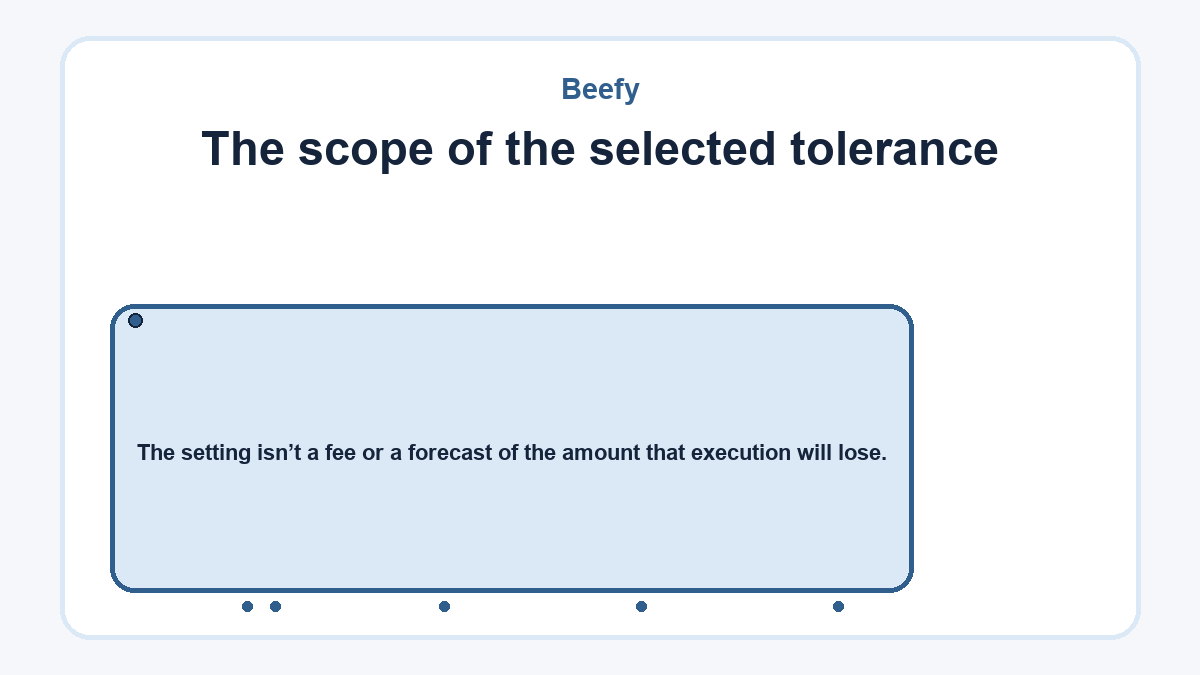
The setting isn’t a fee or a forecast of the amount that execution will lose.
A changed quote before confirmation
A refreshed quote establishes a new proposed outcome. If the interface asks you to confirm a change, compare the revised output with the amount that you were prepared to accept. Keeping the same tolerance doesn’t preserve an earlier exchange rate. It applies to the transaction being prepared, rather than reserving a previous quote.
Choose the tolerance by considering the output deterioration that you accept for the displayed route. Increasing it solely to dismiss a failure can authorize an unwanted conversion. A quote refresh is a smaller first adjustment because it shows the proposed terms before you commit funds.
Price impact inside the quoted conversion
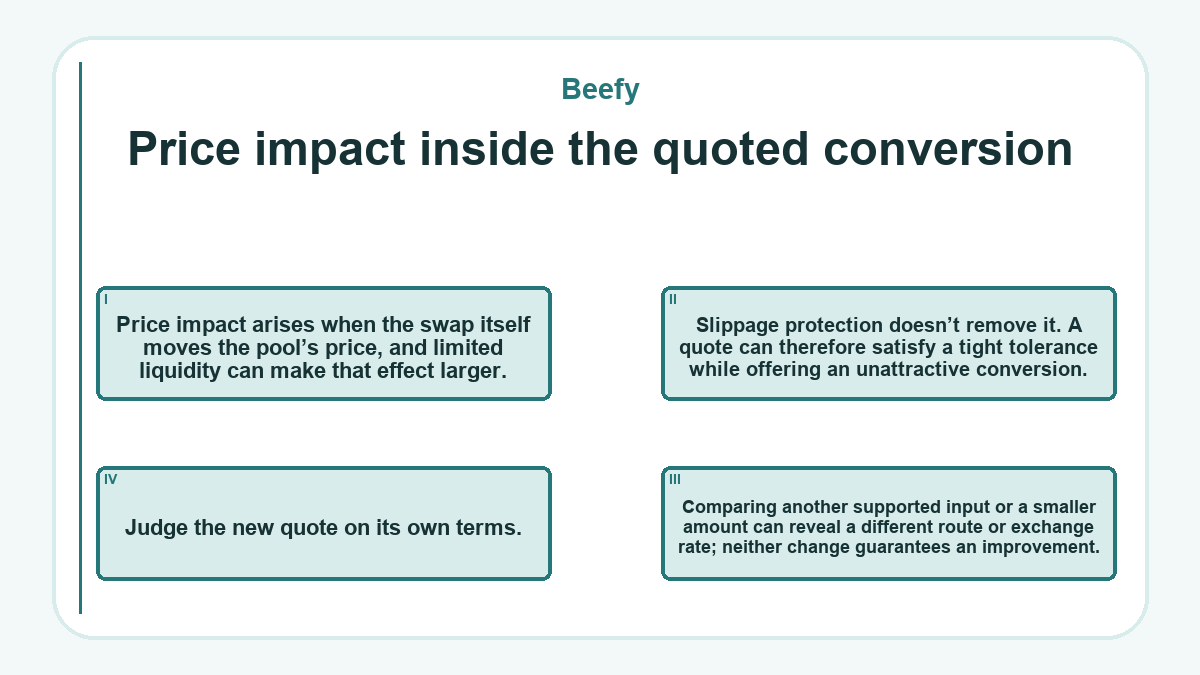
Price impact arises when the swap itself moves the pool’s price, and limited liquidity can make that effect larger. Slippage protection doesn’t remove it. A quote can therefore satisfy a tight tolerance while offering an unattractive conversion. Comparing another supported input or a smaller amount can reveal a different route or exchange rate; neither change guarantees an improvement. Judge the new quote on its own terms.
A deposit choice when the preferred input is unavailable
Suppose you hold the vault’s accepted asset on its destination chain, but would prefer to spend another token. The preferred token has no available Zap route for this product. That missing route determines the choice before slippage matters: use the accepted asset, or leave the deposit unsubmitted while considering another supported input.
- Confirm the intended vault and destination chain, and record the starting balances of the assets under consideration.
- If the preferred token has no route, return to token selection. Raising slippage won’t create compatibility.
- Select the accepted vault asset only if spending it matches the intended allocation. Inspect the resulting deposit amount and any operations that remain.
- Before signing, check available gas, the required spending permission, and any conversion limits shown for the chosen action.
- After submission, compare the confirmed transaction and resulting vault position with the starting record. An approval alone doesn’t establish a deposit.
Changing the input removes the missing conversion route from this decision. It also changes which wallet holding funds the position. The smallest reversible step is changing the selection and inspecting its terms; an executed deposit requires a separate withdrawal to unwind.
Confirmation and recovery across the selected route
A transaction’s status must match the part of the route that it executed. For an ordinary vault deposit, the receipt token represents the resulting position. Its token count needn’t match the number of starting tokens, particularly after conversion. Compare the correct assets and the represented deposit, rather than interpreting different token counts as a conversion loss.
A crosschain Zap requires destination-chain execution after the source-chain transaction. The destination receiver attempts the deposit after processing the bridged message. Its recovery handling allows a failed destination Zap to produce a refund or recovery outcome without reversing the completed bridging process. A successful source transaction therefore isn’t sufficient evidence of vault entry.
An interrupted crosschain deposit can leave funds at different stages, including assets in the wallet or funds awaiting destination processing. The application’s progress display and transaction history help identify that state. Review both relevant chains before submitting another deposit; restarting from the original input can create a second transaction rather than complete the first.
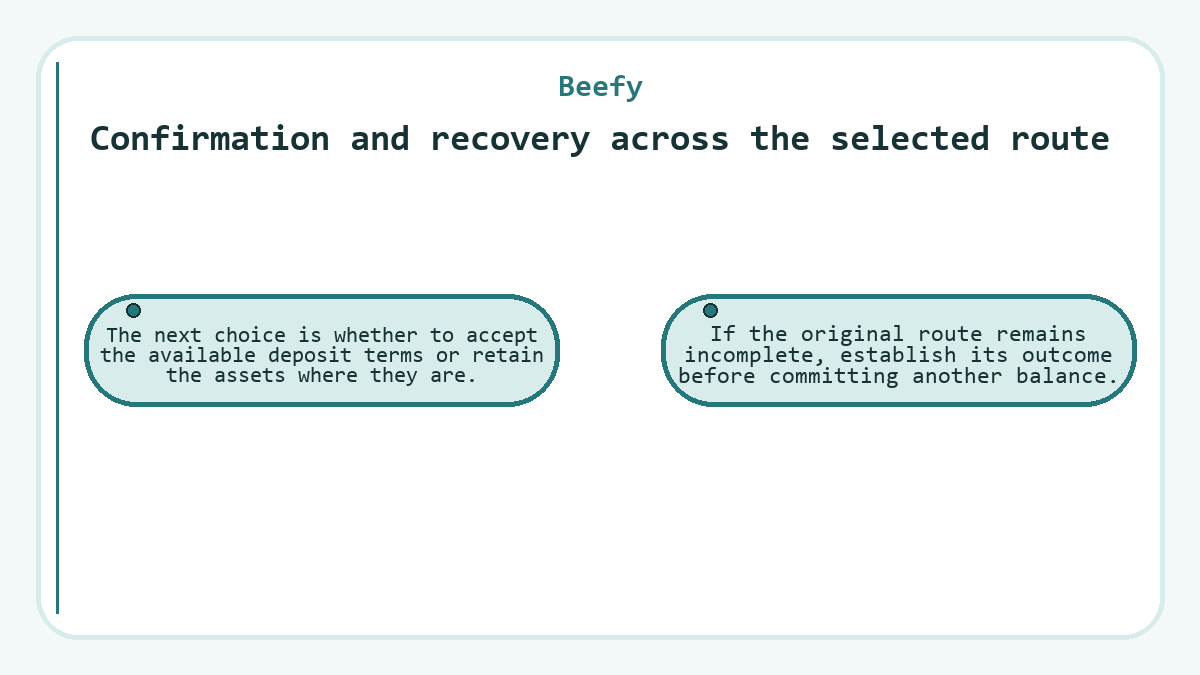
The next choice is whether to accept the available deposit terms or retain the assets where they are. If the original route remains incomplete, establish its outcome before committing another balance.
Frequently asked questions about Beefy
Does changing slippage after signing update my pending Zap?
Changing the interface setting doesn’t rewrite a transaction that you’ve already signed and submitted. Its execution terms belong to that transaction. A new setting applies when another transaction is prepared. Check the pending transaction’s outcome before treating a revised quote as a replacement.
Why are small token amounts left in my wallet after a successful Zap?
Zap returns unused assets when the completed swaps or deposit use different quantities from the simulation. Small residual balances can therefore accompany a successful deposit. They aren’t, by themselves, evidence that the vault entry failed. The deposit transaction and resulting position establish what actually entered the vault.
Must every deposit repeat the token approval?
A separate approval isn’t necessarily required when the relevant spending permission already covers the selected action. Authorization depends on the token, spending contract, and applicable allowance or permit flow. Changing the input or route can change those requirements, so an earlier approval doesn’t establish permission for every deposit.
Will favorable slippage always increase the tokens I receive?
Favorable price movement doesn’t necessarily pass entirely to the user. Aggregator arrangements differ, and some compensate the provider through positive slippage. The displayed tolerance therefore shouldn’t be read as a promise of symmetric gains and losses around the estimate. Assess the quoted output and the completed transaction separately.
How does closing the application affect an unfinished crosschain deposit?
Closing the application doesn’t reverse transactions already recorded on a blockchain. An unfinished crosschain route may still require destination processing or recovery. Reopening the application can restore access to progress information; if its continuation prompt is absent, the wallet history and transaction records remain relevant to locating the funds.
Is a deposit’s slippage setting a limit on later vault losses?
The deposit’s slippage setting governs execution of the entry route, not subsequent changes in the vault position’s value. Token prices and the underlying strategy continue to affect that position after entry. A tightly constrained deposit can still lead to a position whose market value falls.